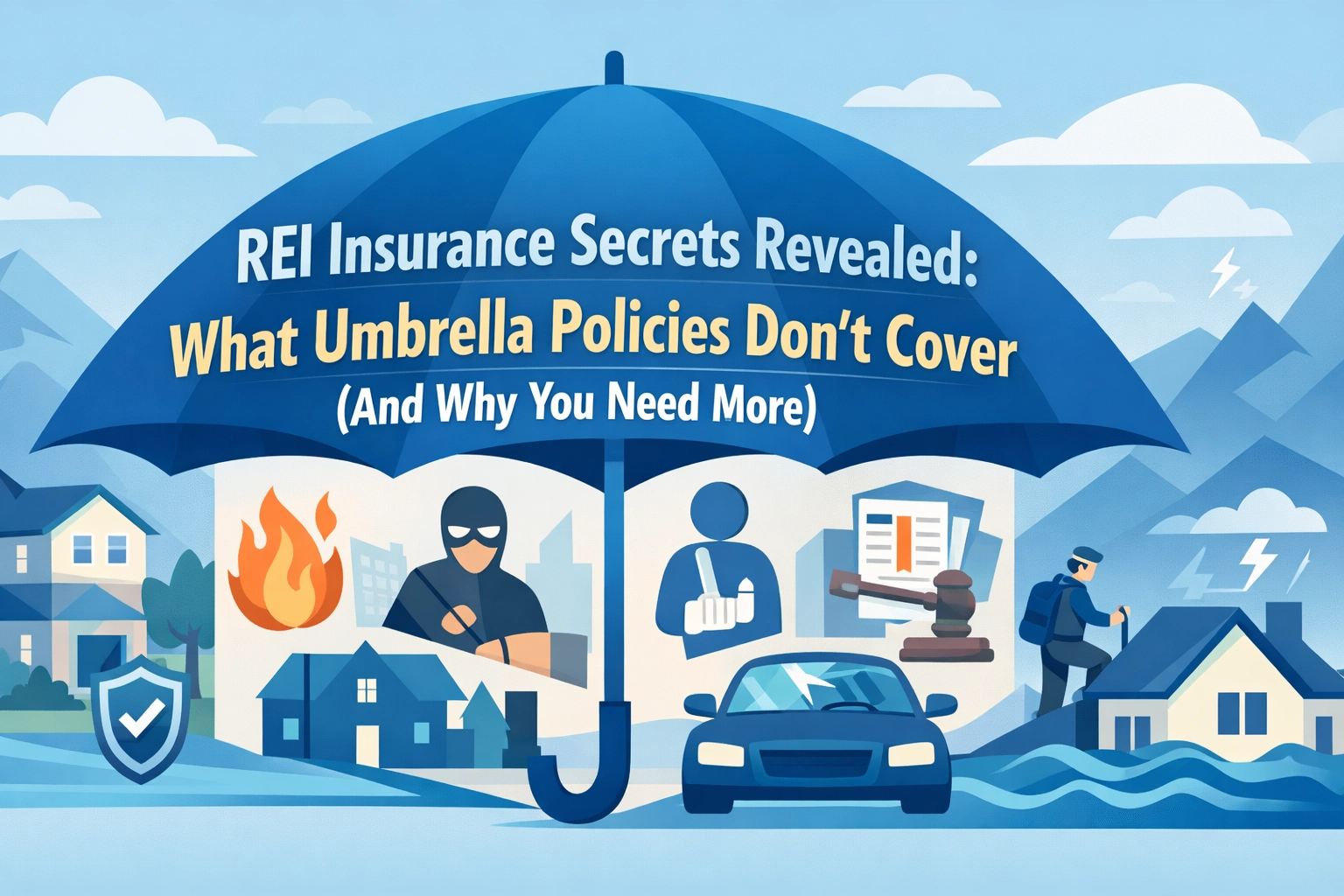
You bought an umbrella policy. You thought you were covered.
You're probably not.
Real estate investors love umbrella policies because they sound comprehensive. The carrier promises $1 million, $2 million, maybe even $5 million in extra liability protection. It feels like a safety net beneath your safety net.
But here's what your agent didn't tell you: umbrella policies have more holes than a property hit by hail. And for REI portfolios, where you're juggling rental properties, vacant rehabs, and short-term rental units, those gaps can cost you everything.
Let's pull back the curtain on what umbrella policies actually exclude, why those exclusions matter for real estate investors, and what you need to do about it.
Before we get into the bad news, here's the good news: umbrella policies do provide valuable excess liability coverage when they work.
They typically kick in after your underlying policies (auto, homeowners, landlord policies) exhaust their limits. If someone sues you for $2 million and your landlord policy maxes out at $500,000, the umbrella covers the remaining $1.5 million.
That's the theory. The reality? Your umbrella policy has fine print that would make a mortgage lender blush.

If you deliberately ignore safety hazards, say, you skip repairs on a staircase you know is dangerous, your umbrella carrier will deny the claim. They classify this as "intentional" or "reckless" conduct.
For REI investors, this gets murky fast. Did you intentionally ignore that code violation, or were you just slow to fix it? The carrier will argue the former. You'll argue the latter. Your legal bills will pile up either way.
Most personal umbrella policies exclude business-related claims. And guess what? Your rental properties are a business.
If a tenant sues you for discrimination, wrongful eviction, or habitability issues, your personal umbrella likely won't cover it. Some carriers offer "incidental business" endorsements, but read the fine print, many exclude real estate activities entirely.
Punitive damages are awarded to punish you, not just compensate the injured party. Many states allow juries to add punitive damages on top of compensatory awards, especially in cases involving neglect or bad faith.
Your umbrella policy? It probably excludes them. Check your policy language. If it says "we will not pay punitive damages," that million-dollar policy just became a lot less valuable.
Some umbrella policies exclude injuries to guests in your vehicle or injuries caused by certain dog breeds. For landlords who occasionally transport contractors or property managers, this can create exposure.
Pet exclusions matter less for REI investors unless you allow tenants to keep restricted breeds (Pit Bulls, Rottweilers, etc.). If you do, confirm your umbrella doesn't have breed-specific exclusions.
Mold claims are notoriously expensive and notoriously excluded. Your landlord policy might have sub-limits ($10,000 is common), but your umbrella often won't extend coverage even if someone sues you for $500,000 in mold-related health damages.
Given how prevalent mold issues are in rental properties, especially vacant properties with poor ventilation, this exclusion is a ticking time bomb.
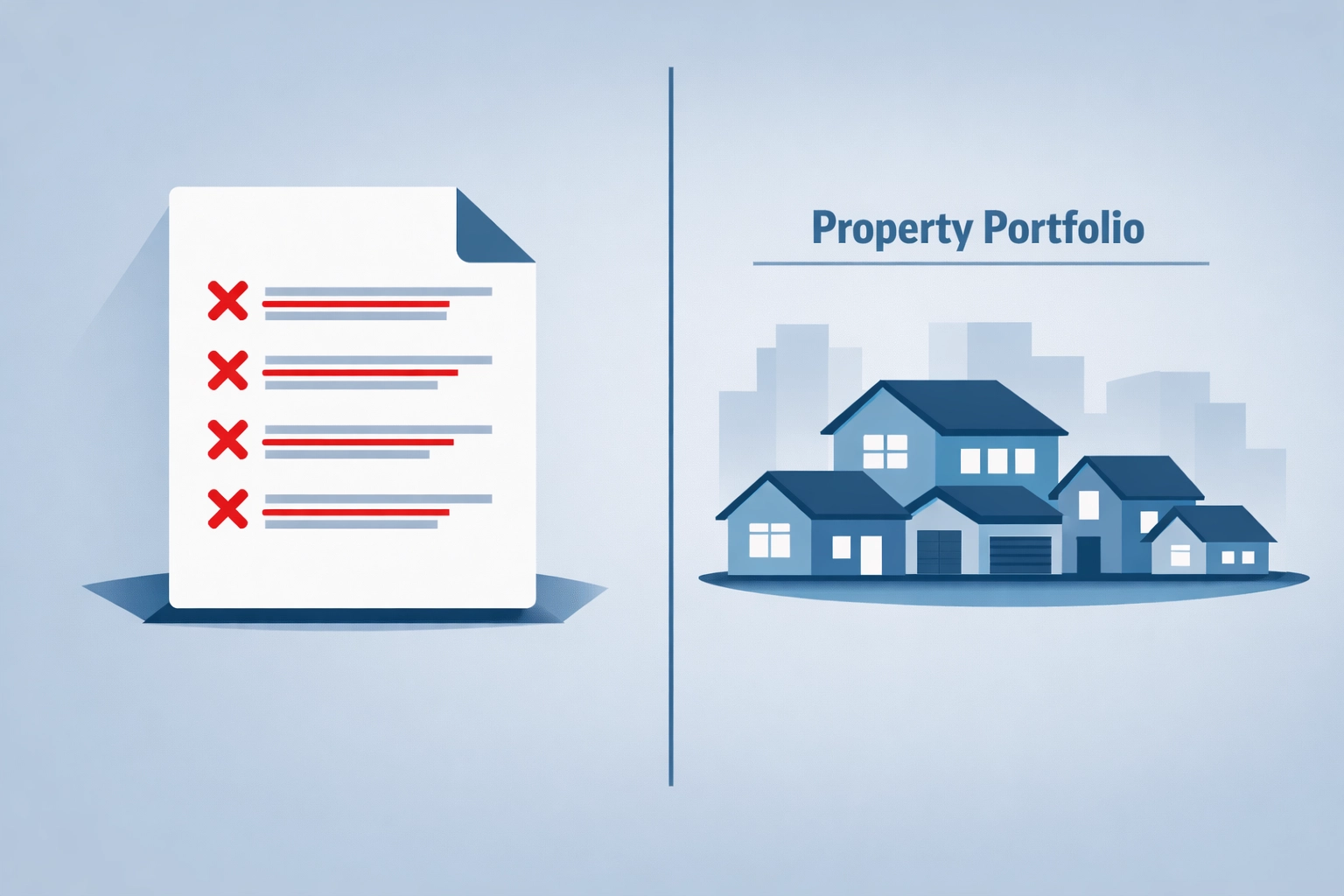
Here's the scariest part: if you don't disclose all your liability-bearing assets to your umbrella carrier, they can deny claims entirely.
Let's say you have five rental properties, two cars, and a boat. You list the cars and your primary residence when you buy the umbrella, but you forget to add the five rental properties.
A tenant sues you for $2 million. Your DP3 landlord policy covers $500,000. You call your umbrella carrier expecting them to cover the remaining $1.5 million.
They decline. Why? Because you never listed the rental properties as underlying exposures. Now you're personally liable for $1.5 million.
This isn't a theoretical risk. Umbrella carriers are ruthless about enforcement. If you fail to disclose an underlying policy, they can argue your entire umbrella contract is void.
You need to disclose:
Miss one? You're uninsured.
Umbrella policies require minimum underlying liability limits to activate coverage. Most carriers require:
If you lower your limits to save money, say, you drop your landlord policy liability from $500,000 to $300,000: your umbrella carrier may refuse to cover the gap.
Example: A $1 million lawsuit comes in. Your landlord policy covers $300,000. Your umbrella requires a $500,000 underlying minimum. You're now personally liable for $200,000 before the umbrella even considers paying.

Not all umbrella policies are created equal. In fact, the same umbrella policy can change dramatically at renewal.
One carrier analyzed their own umbrella policies and found that what was once their "best" policy became one of their "worst" after adding 14+ new exclusions at renewal. Policyholders had no idea their coverage had eroded until they filed a claim.
This unpredictability is why savvy REI investors don't rely on a single umbrella policy. They layer coverage.
Some investors carry two or more umbrella policies from different carriers. If one carrier denies a claim based on an exclusion, the second policy may cover it. This also increases your total limits beyond a single carrier's $5 million cap.
If you own multiple rental properties or operate short-term rentals, consider a commercial umbrella policy instead of (or in addition to) a personal umbrella. Commercial umbrellas are designed to cover business activities, including landlord operations.
Your umbrella is only as strong as the policies beneath it. If your DP3 landlord policy has a $300,000 liability limit and your umbrella requires $500,000, you have a $200,000 gap.
Work with an agent who understands insurance for real estate investors and can audit your entire portfolio annually.
When you apply for an umbrella policy, over-disclose. List every property, every vehicle, every LLC. If you're not sure whether something needs to be listed, list it anyway.
Carriers would rather know about an exposure and charge you $50 more in premium than deny a million-dollar claim later because you forgot to mention a rental property.
This sounds obvious, but most investors never read their umbrella policy. They rely on their agent to explain it. That's a mistake.
Request a sample policy before you buy. Read the exclusions section. If you see exclusions for business activities, mold, or punitive damages, ask about endorsements or alternative carriers.

Umbrella policies are not comprehensive coverage. They're excess liability coverage with significant exclusions and traps for real estate investors.
If you own multiple rental properties, operate short-term rentals, or have a growing REI portfolio, a personal umbrella policy alone won't protect you. You need a strategic approach that includes:
The good news? Once you understand the gaps, you can fill them. The bad news? If you wait until after a claim to find out what's excluded, it's too late.
Want to make sure your REI insurance actually covers what you think it does? That's where we come in. RealAssure specializes in insurance for real estate investors: we know where the gaps are, and we know how to close them.
Because the worst time to find out what your umbrella doesn't cover is when it's raining lawsuits.