Property insurance has become the quiet deal-breaker in real estate transactions. What used to be a straightforward closing requirement now directly impacts your cash flow, ROI calculations, and whether a property even pencils out. The 2026 insurance landscape is splitting into two distinct markets, and understanding which one you're operating in will determine your strategy for the year ahead.
The softening has arrived: but only in certain ZIP codes. Non-catastrophe areas across the Midwest, mid-Atlantic, and parts of the Southeast are seeing premium stabilization and, in some cases, modest decreases of 5-12% as carriers compete for quality business. Underwriting capacity has returned, and investors with well-maintained properties and clean loss histories are finally catching a break.
Meanwhile, CAT-exposed zones tell a different story. Florida coastal properties, Texas Gulf Coast assets, and California wildfire zones continue to see double-digit rate hikes of 20-45% annually. Carriers aren't fleeing these markets entirely, but they're selecting accounts with surgical precision. If your property sits in a high-risk zone, expect stricter underwriting standards, higher deductibles, and premiums that make your pro forma sweat.

Geography isn't destiny: it's just the starting point. Property condition, age, and your claims history now matter more than ever in determining which market you're actually competing in.
AI-driven underwriting platforms are eliminating the old "application and pray" approach. Carriers now pull property data from multiple sources before you even submit: public records, prior claims databases, aerial imagery, and predictive analytics models. This means your property's risk profile exists before you request a quote: and it's more accurate than anything you might write on an application.
Drone inspections have become standard practice for properties over $500K in value or located in weather-prone areas. Expect an aerial survey to capture roof condition, proximity to trees or brush, visible maintenance issues, and even pool safety features. The inspection happens whether you schedule it or not: carriers launch drones based on satellite imagery triggers, and you receive the results along with your quote or non-renewal notice.
This technology shift creates opportunity for prepared investors. Properties with documented maintenance records, recent capital improvements, and updated risk mitigation features (smart leak detectors, monitored security systems, impact-resistant roofing) receive preferential pricing. The data tells your property's story before you do: make sure it's a story underwriters want to hear.
Dwelling fire policies (DP3) remain the gold standard for investment properties, providing replacement cost value (RCV) coverage on the structure itself. Unlike actual cash value (ACV) policies that depreciate your claim payout, RCV coverage rebuilds your property to its pre-loss condition without factoring in age or depreciation.
The critical distinction: DP3 policies cover the dwelling structure only, not your tenants' personal property. This makes them ideal for rental properties where you own the building but tenants insure their own belongings. DP3 forms typically include fire, lightning, windstorm, hail, explosion, vandalism, and theft: the perils most likely to result in total or significant partial losses.
Lenders require coverage equal to 100% of replacement cost or the loan amount, whichever is greater. This isn't negotiable, and undercoverage creates two problems: claim payouts get reduced proportionally based on the coinsurance penalty, and lenders may trigger default provisions if coverage falls below loan requirements.

Budget $1,200-$3,500 annually for standard properties in favorable markets, and $2,500-$6,000+ for older properties or CAT zones. These ranges reflect the bifurcated market conditions dominating 2026.
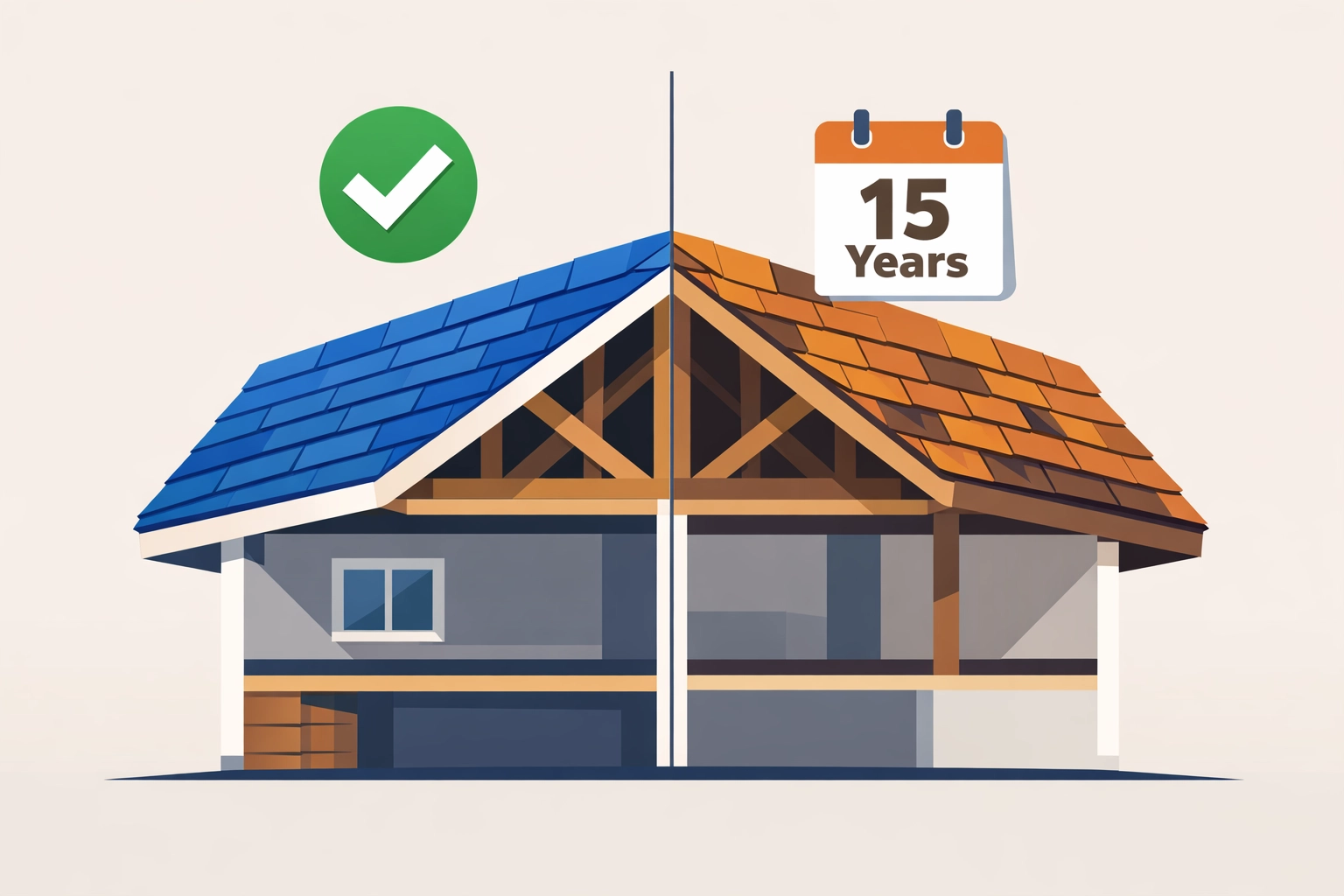
Roof age has emerged as the single most important underwriting factor outside of location and claims history. Carriers now implement strict rules around the 15-year threshold: properties with roofs approaching or exceeding this age face higher wind/hail deductibles (often percentage-based at 2-5% of dwelling coverage), mandatory inspections before renewal, and potential switches from RCV to ACV settlement on roof claims only.
Some carriers won't write new policies on properties with roofs over 15 years old without a recent inspection showing remaining useful life. Others automatically exclude wind/hail coverage on aged roofs or apply surcharges of 15-30% on the base premium.
The math is simple: A $12,000 roof replacement today costs less than three years of premium surcharges plus the reduced claim payout under ACV terms. If your property has a roof approaching the 15-year mark, proactive replacement before inspection flags trigger saves money and preserves full coverage terms.
Document everything: installation date, materials used (architectural shingles, metal, tile), manufacturer warranties, and any recent repairs. This documentation becomes leverage during underwriting negotiations and proves remaining useful life to carriers skeptical of older roofs.
Leak detection systems, smart thermostats, and monitored security reduce premiums by 5-15% with most carriers. More importantly, they prevent claims entirely: the best way to avoid premium hikes and maintain underwriting appetite. Water damage claims account for nearly 40% of all property insurance losses, and a $200 smart leak detector prevents $15,000 bathroom flood scenarios.
Carriers now offer telematics-style programs where documented installation of approved smart home devices triggers immediate discounts. Ring doorbells, Nest leak detectors, ADT monitoring: these aren't luxuries anymore. They're underwriting criteria.
Construction costs increased 23% between 2021-2024, and most insurance policies don't automatically adjust coverage to match. If you purchased a property two years ago and haven't updated your dwelling coverage amount, you're likely underinsured by 15-20%. This triggers coinsurance penalties on partial losses and leaves you personally funding reconstruction cost overruns after total losses.
Order a replacement cost valuation annually: most cost $150-$400 and provide defensible coverage recommendations. Your carrier will thank you for the increased premium, but more importantly, you'll sleep knowing a claim won't bankrupt your investment.
Specialty investment property insurers understand landlord needs better than standard homeowner carriers. They maintain capacity in challenging markets and offer portfolio discounts for multiple properties.
For portfolios exceeding $5M in total insured value, consider umbrella policies that extend liability limits across all properties and entities. The typical costs is far outweighed by the additional $1-5M in coverage beyond underlying policy limits.
RealAssure was founded by real estate professionals who've personally navigated the insurance maze from the investor side. We understand that insurance isn't just about coverage: it's about keeping deals moving, protecting cash flow, and maintaining lender relationships.
Our process eliminates the usual back-and-forth: complete online application, instant quotes from multiple specialty carriers, and dedicated support through closing. We work exclusively with insurers who understand investment properties, renovation projects, and vacancy periods: no more explaining to a homeowner-focused agent why your property doesn't have tenants yet.
Comprehensive protection means addressing the gaps standard policies ignore: builder's risk during renovations, loss of rents coverage for eviction delays, and ordinance or law protection when code upgrades add 20% to reconstruction costs. We handle the details so you can focus on finding the next deal.
Property insurance has graduated from afterthought to strategic consideration. The investors who thrive in 2026 understand the market's geography-driven split, leverage technology to their advantage, maintain properties proactively, and work with specialists who speak their language.
Your insurance strategy should match your investment strategy: data-driven, proactive, and focused on long-term value protection. The cost of getting it wrong: forced property sales, blown renovations, or lender defaults: far exceeds the cost of getting it right.
Start your quote process today, and let's make sure your insurance supports your investment goals rather than derailing them. The 2026 market rewards prepared investors( make sure you're one of them.)