You're running a short-term rental. Bookings are steady, your reviews are solid, and the cash flow looks good on paper. There's just one problem: you might be operating without real insurance coverage.
Most real estate investors rely on assumptions about their STR coverage that simply aren't true. They believe their homeowners policy extends to rental activity, or that Airbnb's Host Guarantee will handle major claims. Meanwhile, they're one guest injury or property damage claim away from a financially devastating denial.
Let's break down the three most dangerous myths about short-term rental insurance: and what you actually need to protect your investment.
It doesn't. Standard homeowners policies explicitly exclude business activity, and short-term rentals qualify as commercial operations in the eyes of most carriers.
Here's what happens when you file a claim. A guest trips on your deck stairs and breaks their wrist. You submit the liability claim to your homeowners insurer. They pull your policy, see the business use exclusion, and deny it outright. You're now facing a lawsuit with zero coverage.

The same applies to property damage. If a guest throws a party that causes $15,000 in damages, your homeowners policy won't cover it. These policies are designed for owner-occupied residences, not income-generating properties where strangers cycle through every few days.
The exclusion isn't a technicality: it's fundamental to how homeowners insurance is underwritten and priced. Transitioning a property to short-term rental use changes the risk profile entirely, and carriers won't absorb that risk under a residential policy.
Platform insurance sounds reassuring. Airbnb advertises Host Guarantee up to $1 million, and Vrbo offers similar protection. The problem? These programs function as secondary coverage, not primary.
That means they only kick in after your other policies are exhausted. Since your homeowners policy excludes rental activity, you have no primary coverage to exhaust. Airbnb's coverage becomes your only option: and it comes with serious limitations.
Here's what Airbnb's Host Guarantee doesn't cover:
Additionally, the claims process is notoriously slow and difficult. You're dealing with a platform's internal dispute resolution system, not a licensed insurance carrier with regulatory oversight. Denials are common, timelines stretch for months, and appeals are murky at best.
For context, most dedicated short-term rental policies cost between $1,500 and $2,000 annually. Relying on free platform coverage to protect a six-figure asset is a risk calculation that doesn't add up.
Traditional landlord policies cover long-term leases, typically 30 days or longer. They're not designed for the rapid turnover and elevated liability exposure of short-term rentals.
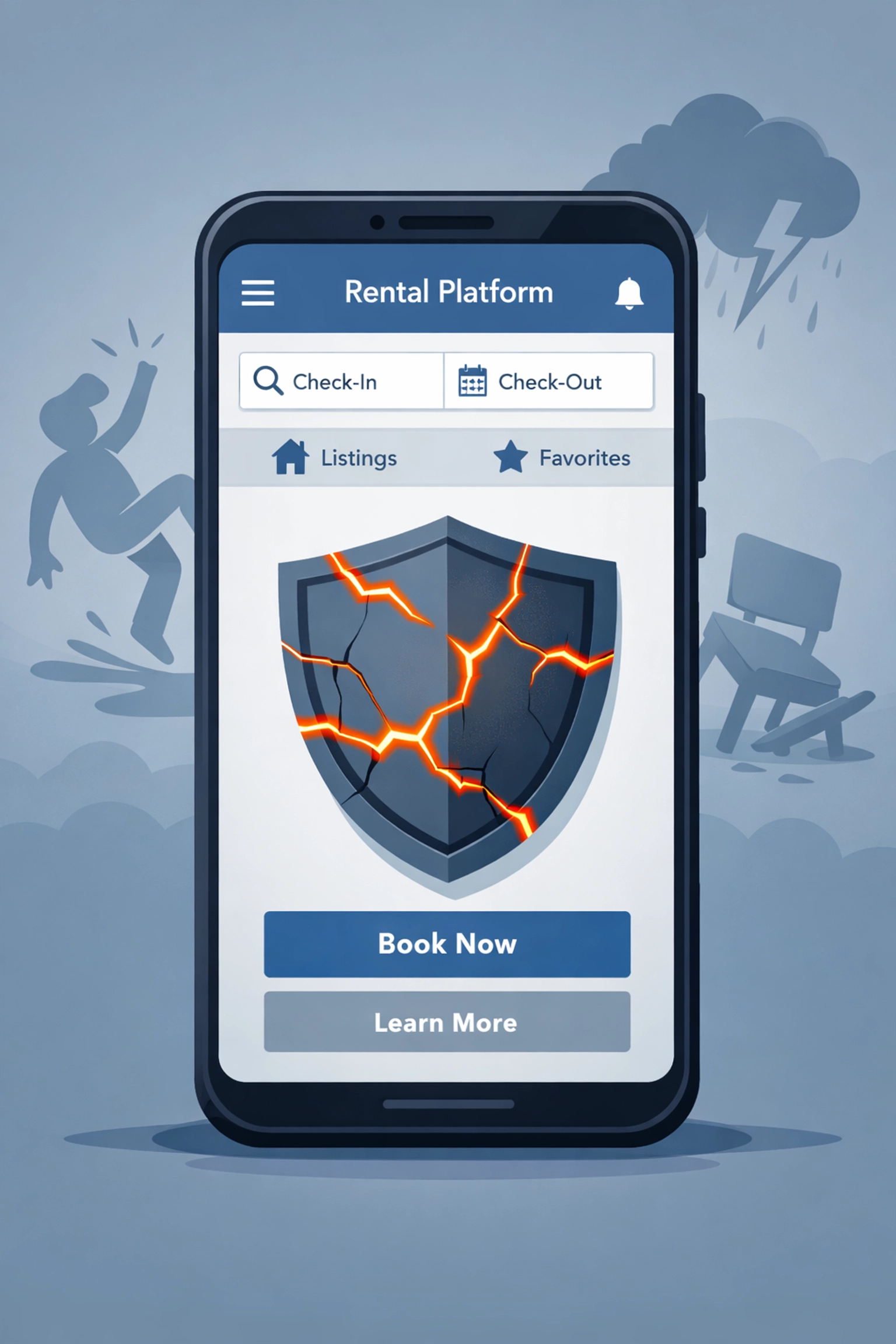
Landlord insurance assumes your tenant carries renters insurance, which transfers certain liability risks away from you as the property owner. In short-term rentals, guests don't carry such policies. You remain fully liable for injuries, property damage claims, and third-party incidents.
Moreover, landlord policies often include vacancy restrictions and occupancy requirements that conflict with STR operations. If your property sits empty between bookings for more than 30 or 60 days, coverage may lapse. This is especially problematic in seasonal markets where occupancy fluctuates dramatically.
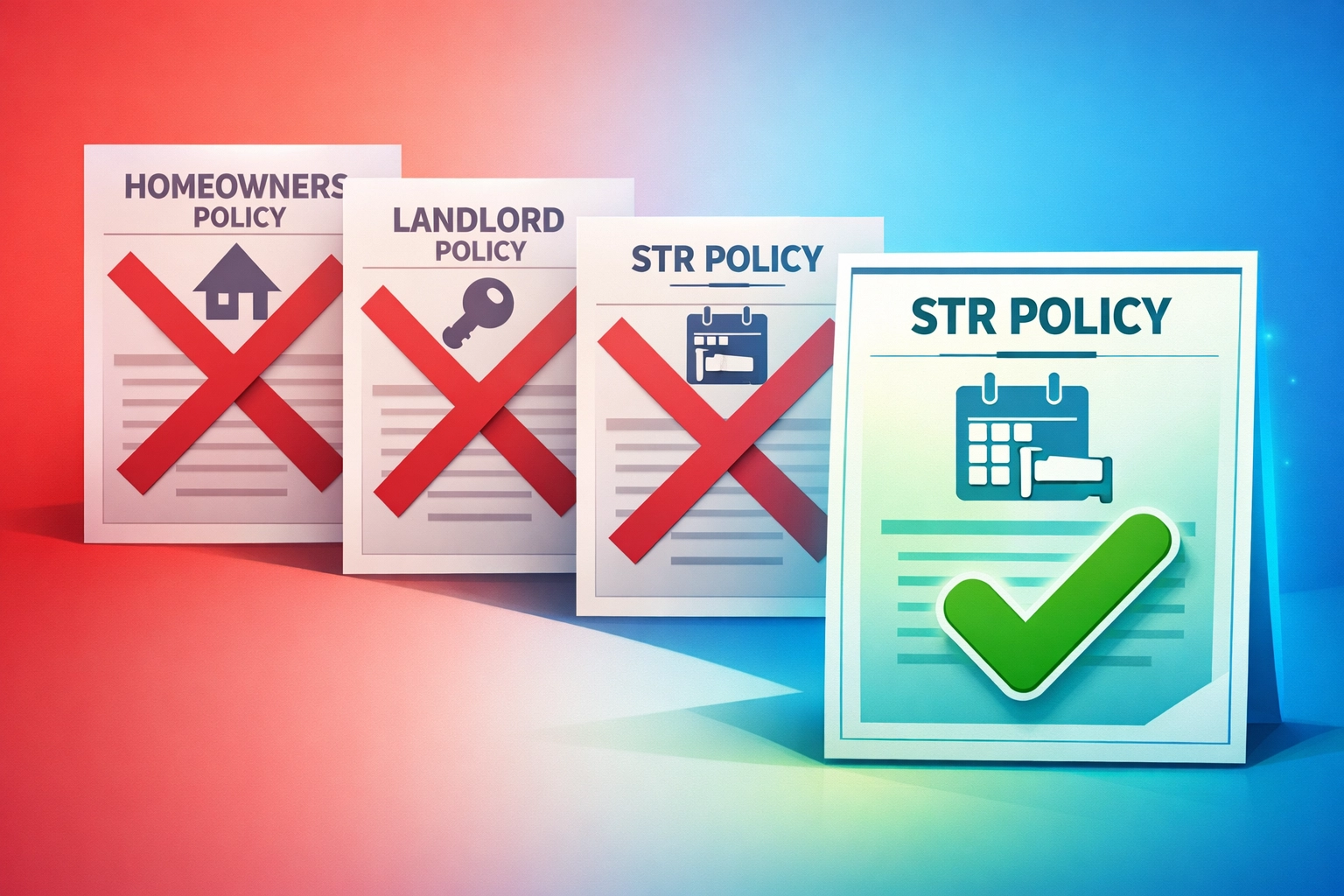
Proper short-term rental insurance addresses the gaps that standard policies ignore. It's not an upsell: it's the baseline coverage your operation requires to function legally and safely.
What dedicated STR insurance covers:
Additionally, many municipalities require proof of commercial or short-term rental insurance to issue or renew STR permits. Operating without it can result in fines, permit revocation, or inability to legally rent your property.
The coverage isn't just about protecting your asset: it's about protecting your ability to continue operating. One denied claim can shut down your entire STR business model.
If you're operating short-term rentals in Florida, you face additional complications. The state's high occupancy rates and severe weather exposure create unique insurance challenges.
Florida's hurricane season means your property faces elevated windstorm risk six months of the year. Many standard policies exclude or severely limit wind and hail coverage, forcing you to purchase separate windstorm policies through Citizens Property Insurance or private carriers at premium rates.
For STR investors, this creates a coverage gap. If a hurricane forces evacuations and cancellations during peak season, you need both property coverage for physical damage and loss-of-income coverage for the bookings you lose. Standard homeowners policies won't cover the income component, and platform guarantees don't address weather-related business interruption.
Furthermore, Florida's insurance market has become increasingly restrictive. Carriers are pulling out of the state or dramatically limiting new policies. Getting proper STR coverage requires working with specialized carriers who understand the Florida market and can structure policies that account for both weather risk and rental operations.
When you purchase dedicated short-term rental insurance, you're buying a commercial policy designed for your specific operation. Here's what that looks like in practice.
Primary liability coverage protects you when guests are injured on your property. Slip-and-falls, pool accidents, balcony incidents: these are all covered under a properly structured STR policy. Coverage limits typically range from $500,000 to $2 million depending on your property value and risk exposure.
Property coverage extends beyond structure to include business property. Your furniture, appliances, linens, and guest amenities are covered at replacement cost, not the depreciated actual cash value that homeowners policies use.
Loss of income coverage replaces rental income when covered perils make your property uninhabitable. If a fire damages your kitchen and you need to cancel six weeks of bookings while repairs are completed, this coverage pays for that lost revenue.
Additional living expense coverage can reimburse you for costs if you need to relocate guests to alternative accommodations due to covered damage: protecting your reputation and guest relationships even during claims.
Some policies also include coverage for theft of guest property, which can happen when you're managing multiple properties and access is distributed to cleaning crews, maintenance workers, and guests themselves.
The transition from myth-based coverage to actual protection starts with a single decision: stop relying on platform guarantees and homeowners policies for commercial operations.
Contact a broker who specializes in short-term rental insurance or investment property coverage. They'll assess your specific operation: property value, location, occupancy rates, amenities: and structure a policy that addresses your actual risk profile. For most REI investors running STRs, this means a commercial dwelling fire policy (DP3) with STR endorsements, or a specialized short-term rental product.
Expect to pay more than a standard homeowners policy. That's appropriate: you're operating a business, and business insurance costs more because the risk is higher. The annual premium is a legitimate operating expense, no different from property management fees or maintenance reserves.
If you're scaling multiple STR properties, consider umbrella liability coverage on top of your individual property policies. This adds an additional $1-5 million in liability protection across your portfolio for a relatively modest premium increase.
Finally, review your coverage annually. As your operation grows, your occupancy changes, or you add amenities like pools or hot tubs, your insurance needs evolve. What protected you adequately in year one may leave you exposed in year three.
The bottom line: platform guarantees are marketing tools, not insurance policies. Homeowners coverage doesn't extend to commercial operations. And landlord policies aren't designed for short-term rental risk. If you're serious about protecting your real estate investment, dedicated STR coverage isn't optional: it's foundational.
Your short-term rental is a business asset. Insure it like one.