You set up multiple LLCs to protect your personal assets. Smart move. But if you're not maintaining those entities correctly: or if your insurance isn't structured to match your entity structure: you're leaving the door wide open for creditors to pierce the veil and come after everything you own.
Most real estate investors understand the concept of liability protection. What they miss are the operational details that actually make it work. One commingled bank account. One missing rental agreement between entities. One underinsured property in the wrong LLC. Any of these can unravel the entire structure.
Here's what you need to know to keep your personal assets protected when you're running multiple LLCs.
When you form an LLC, you create a legal barrier between your personal assets and your business liabilities. If someone sues one of your properties, they can only go after the assets inside that LLC: not your home, personal bank accounts, or other properties.
That protection disappears when a court "pierces the corporate veil." This happens when you treat your LLC like a personal piggy bank instead of a separate legal entity. Once a judge determines you've failed to maintain proper separation, your LLC becomes legally irrelevant. The plaintiff can pursue your personal assets just as if the LLC never existed.
It's not a theoretical risk. Courts pierce the veil regularly when investors fail basic operational requirements.

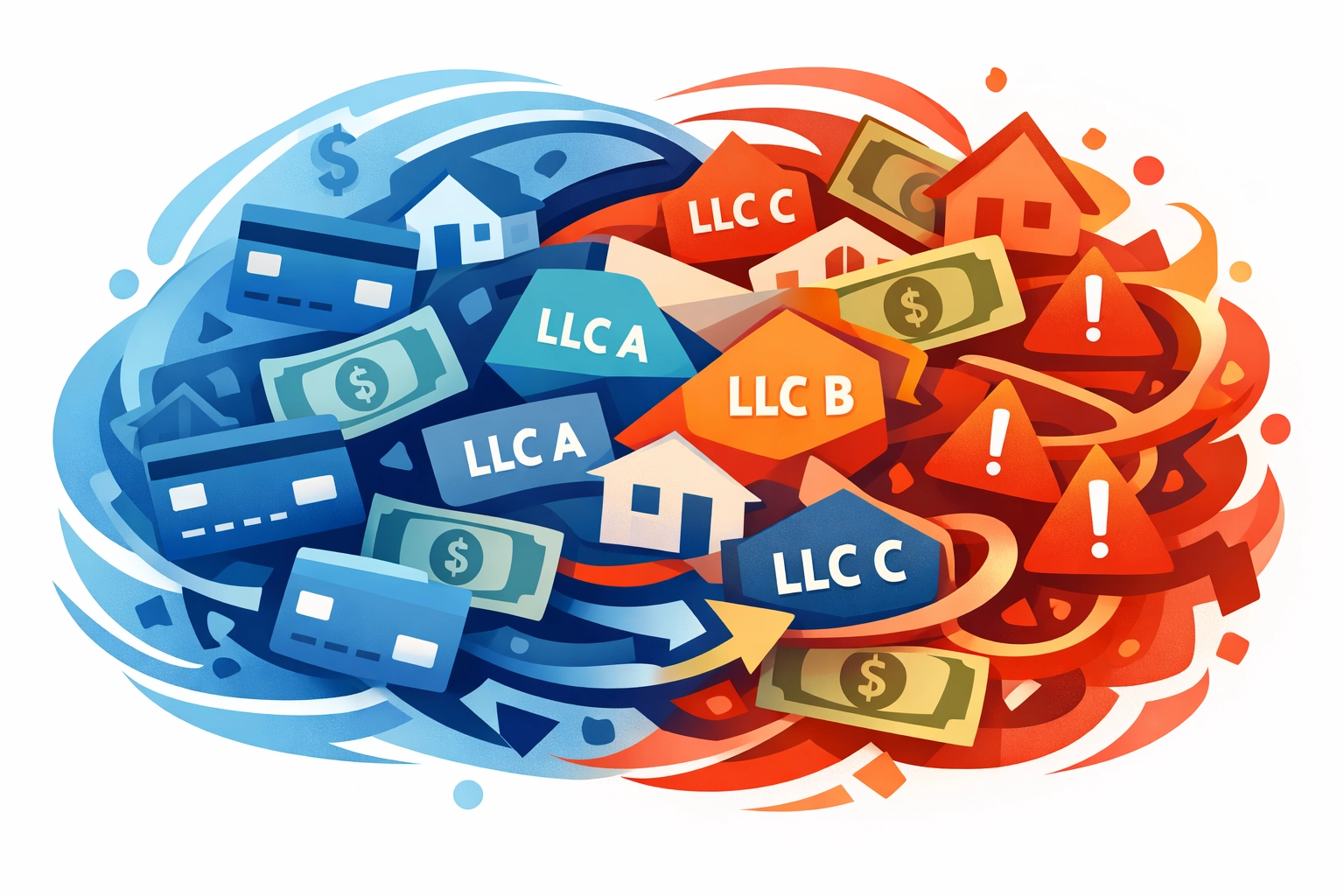
This is the fastest way to destroy your liability protection. When you mix personal funds with LLC funds: or transfer money between LLCs without proper documentation: you signal to the court that you don't actually treat these entities as separate.
What commingling looks like:
Each LLC needs its own dedicated bank account. Every transaction between entities needs documentation. No exceptions.
Putting all your properties under a single LLC defeats the entire purpose of entity-level protection. When multiple properties sit in one LLC, a lawsuit against any property puts all company assets at risk.
A slip-and-fall at your duplex in Cleveland can expose your four-plex in Columbus and your SFR in Cincinnati if they're all in the same entity. The plaintiff's attorney will go after the entire LLC's assets to satisfy the judgment.
The solution is simple but requires discipline: one property per LLC, or at minimum, separate LLCs for different markets or property types.
If you operate a parent LLC that manages subsidiary property-holding LLCs, those relationships must be documented in writing. Without formal management agreements, rental agreements, or operating documents, courts see right through the structure.
Essential documentation includes:
Many investors form the LLCs but never create the paperwork that proves these are truly separate entities with arm's-length relationships.
Your LLC is not you. If you sign contracts in your personal name, make business decisions without formal documentation, or fail to identify yourself as acting on behalf of the LLC, you erode the legal separation.
Common mistakes:
The LLC only works when you consistently operate as if you're managing someone else's company: because legally, you are.
Here's the trap most investors completely miss: even if your LLC structure is perfect, inadequate or improperly structured insurance can still expose your personal assets.
If a $2 million judgment hits one of your LLCs and your policy only covers $500,000, the plaintiff can seize every asset in that LLC to cover the shortfall. If you've commingled funds or failed documentation requirements, they'll pierce the veil and keep going into your personal accounts.
Insurance must be structured entity-by-entity to match your liability compartmentalization strategy.
Every property-holding LLC needs its own landlord insurance policy with that specific LLC named as the insured party. Don't put "John Smith" as the named insured on a policy covering a property owned by "Smith Rentals LLC."
This creates confusion about which entity actually holds coverage and can lead to denied claims.
A commercial umbrella policy can provide excess liability coverage across multiple LLCs, but it must be structured correctly. The umbrella should list each LLC as an additional insured and clearly state which underlying policies it sits above.
Work with an agent who understands multi-entity structures. Standard personal umbrella policies often won't extend to LLCs or rental properties, leaving gaps you don't discover until claim time.
A common mistake: reducing coverage limits on lower-value properties to save on premiums. If that $80,000 duplex carries minimal liability coverage and generates a major lawsuit, you're exposing the entire LLC: and potentially piercing the veil to your personal assets.
Every property should carry sufficient liability coverage to protect against realistic worst-case scenarios, regardless of the property's value. Consider:
Each LLC should have its own dedicated insurance policy. Trying to cover properties in different entities under one master policy creates confusion about which entity is actually insured and can complicate claims.
The small savings on premium administration isn't worth the risk of coverage disputes or veil-piercing arguments when something goes wrong.
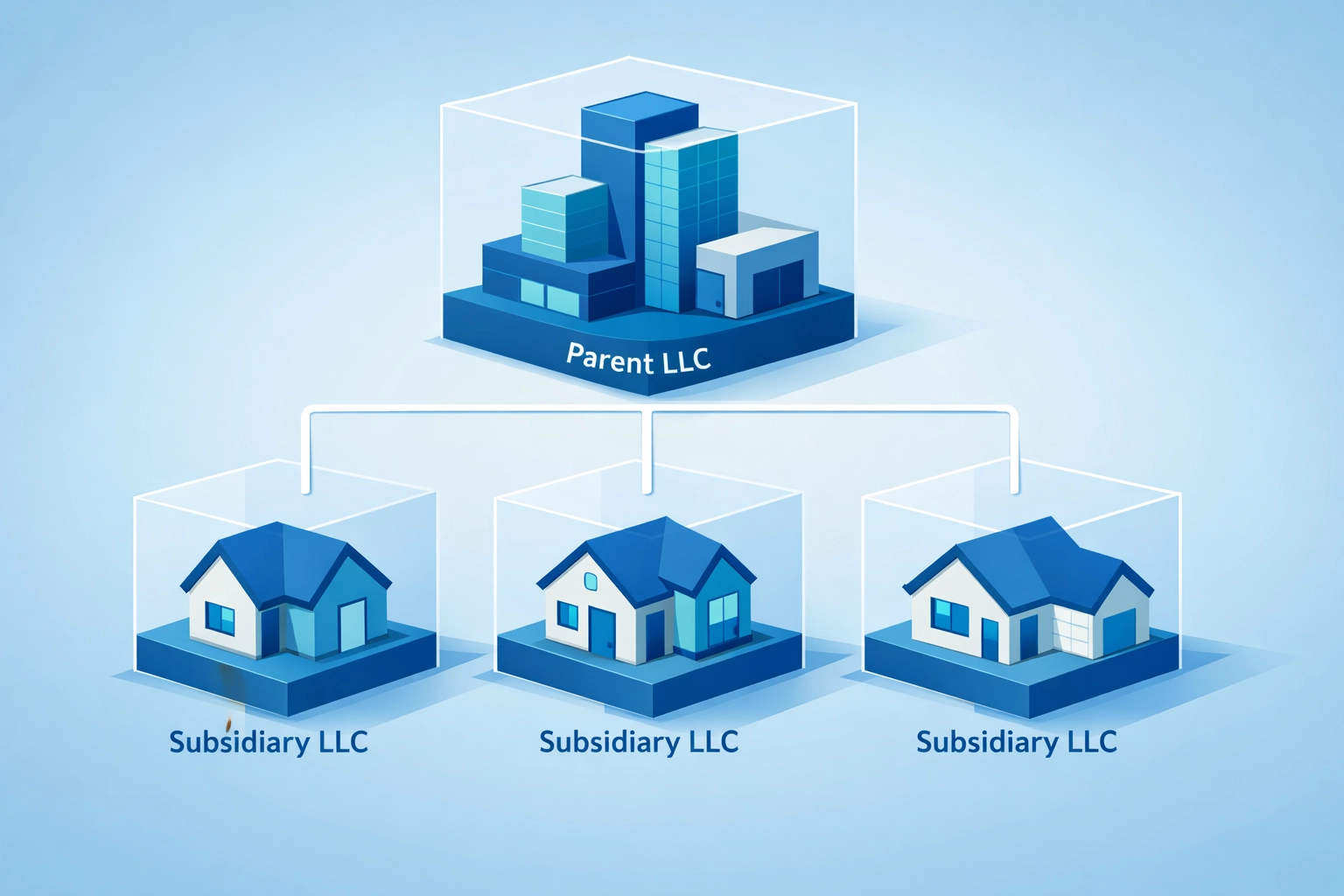
Many investors create a parent management LLC that oversees multiple property-holding subsidiary LLCs. This structure works well for liability compartmentalization, but it creates specific insurance considerations.
The parent LLC needs its own general liability policy covering its management operations. This is separate from the property policies held by each subsidiary. The parent's policy should cover:
Additionally, consider whether the parent LLC should be named as an additional insured on each subsidiary's property policy. This can provide an extra layer of protection, but it must be documented correctly to avoid creating an argument for veil-piercing.
Insurance is critical, but it's only part of the asset protection equation. You also need operational discipline across all your entities:
Maintain separate accounting for each LLC. Every entity needs its own books, its own tax return, and its own financial records. No exceptions.
Document every inter-company transaction. If LLC A provides services to LLC B, create a written agreement. If you loan money between entities, execute a promissory note with interest and repayment terms.
Hold annual meetings and keep minutes. Even single-member LLCs should document major decisions, property acquisitions, and policy changes through formal meeting minutes.
Never guarantee LLC debts personally unless absolutely necessary. Every time you sign a personal guarantee, you create a direct path through the veil to your personal assets.
Keep each LLC's liability exposure isolated. Don't use one LLC to guarantee another's obligations or cross-collateralize properties between entities without clear strategic reasoning.
The consequences of poor entity maintenance and insurance structure aren't abstract. Here's what actually happens:
A tenant sues over a slip-and-fall injury at one property. During discovery, the plaintiff's attorney requests bank records and finds you've been mixing funds between properties. They also discover your insurance policy doesn't adequately cover the LLC structure. The attorney files a motion to pierce the corporate veil.
The court agrees you haven't maintained proper separation. The judgment exceeds your insurance coverage. Now your personal assets: your home, investment accounts, other properties: are all exposed to satisfy the shortfall.
One operational mistake can cascade through your entire portfolio.
Structuring multiple LLCs with proper insurance coverage isn't a DIY project. You need a team that understands how entity structure and insurance interact:
The cost of proper professional guidance is a fraction of what you'll lose if your structure fails when you need it most. Learn more about proper insurance coverage for real estate investors.
Asset protection through multiple LLCs works: but only when you maintain operational discipline and structure your insurance to match your entity framework. Every property needs proper coverage under the correct entity name. Every transaction between entities needs documentation. Every account needs separation.
The investors who successfully protect their personal assets don't just set up the structure once and walk away. They treat entity maintenance and insurance management as ongoing operational requirements, just like rent collection and property maintenance.
Your LLC structure is only as strong as its weakest link. Make sure that link isn't your insurance coverage or your operational discipline.